Understanding Grief: A Christian Counselor's Guide to Navigating Loss
Christian grief counseling guide by Sarah Hanlin of Reviving Hope Christian Counseling. Learn how faith, counseling, and community support help navigate loss.
·
5 min read

Contributors

Clifton Hickman
Author
LPC, CSAT, EMDR, Gottman Level 3
Clifton Hickman has been a practicing therapist since 2020 and specializes in porn addiction, sex addiction, trauma, couples, infidelity, and addiction. He has been featured in Covenant Eyes, where he writes on pornography addiction and recovery. He also has a Foundations in Biblical Counseling from CCEF. As a co-founder of Reviving Hope Christian Counseling, he loves helping people find hope in the midst of their struggles. He is a father of two daughters and loves college football, reading, and movies.

Sarah Hanlin
Editor
LCSW
Sarah Hanlin has been a mental health therapist since 2020 and specializes in grief counseling, anxiety, and trauma. She works with teens (13+) and adults. She enjoys walking with clients through hard seasons with clinical, therapeutic, and biblical wisdom.
Key Takeaways |
|---|
|
featuring Sarah Hanlin, LCSW
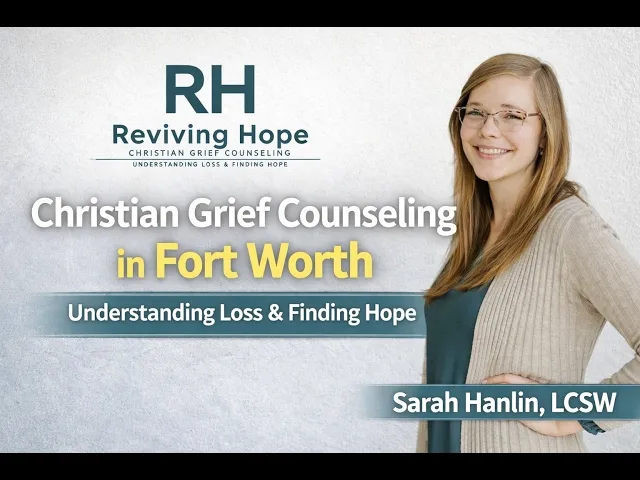
Grief is one of life's most challenging experiences, yet it's something many of us struggle to talk about openly. At Reviving Hope Christian Counseling in Fort Worth, Texas, our therapist Sarah Hanlin specializes in grief therapy that helps individuals navigate the complex journey of grief through a Christian lens. In a recent conversation, Sarah shared valuable insights about grief counseling that can help both those who are grieving and those supporting loved ones through loss.
Does Grief Follow a Predictable Pattern?
Many people are familiar with the five stages of grief: denial, anger, bargaining, depression, and acceptance. However, Sarah explains that grief rarely follows this orderly progression.
"Grief is non-linear," Sarah notes. "You might experience depression and then move back to denial. These stages aren't clean or orderly—they're all over the place."
This understanding can bring tremendous relief to those who feel they're 'doing grief wrong' because their experience doesn't match what they've heard about in the five stages of grief.
If Grief Feels Less Heavy, Am I Forgetting Them?
One of the most common concerns Sarah encounters in her counseling practice is the guilt people feel when their grief begins to lighten.
"As we move through our grieving process, we begin to integrate our grief into our lives," Sarah explains. "The change in feelings doesn't mean you're forgetting your loved one or that you love them any less."
Sarah encourages clients to find meaningful ways to carry their loved ones with them as they move forward—whether by wearing their clothes, writing letters to the deceased, engage in activities they enjoyed with their loved one, remembrance events, or simply remembering how proud they would be of you. For Christians who have lost believing loved ones, there's an additional comfort: "We're not just remembering them in the past tense—we're also going toward them as we move toward Heaven. They're in our futures, as well as our pasts."
Is Something Wrong If You're Not Crying?
Not everyone grieves the same way, and Sarah emphasizes that there's no "right" way to express grief.
"Our culture is grief-ignorant," Sarah observes. "We lack education on all the ways grief can look different than just crying and being sad."
Grief can manifest differently depending on personality, circumstances, and the nature of the loss. If a loved one suffered for a long time, relief at their peace may be the predominant emotion. The key message: there's no right or wrong way to feel.
Can Christians Grieve Deeply and Still Have Hope?
Some Christians struggle with the idea that deep grief might indicate a lack of faith. Sarah addresses this misconception directly by pointing to 1 Thessalonians 4:13, which says we "do not grieve like the rest who have no hope."
"Paul isn't saying we shouldn't grieve," Sarah clarifies. "He's saying we don't need to grieve hopelessly. We can hold hope and grief at the same time."
She also points to Jesus weeping over Lazarus, even knowing He would raise him from the dead, as evidence that grief is a deeply human and godly response to loss. "If Christ grieved over His friend, then we certainly have permission to grieve over our loved ones."
What's Normal in Grief?
Many people worry that their grief symptoms are abnormal. Sarah reassures that a wide range of experiences are completely normal. Symptoms of grief often include but are not limited to:
Loss of sleep
Inability to focus
Difficulty making decisions
Struggling to hold conversations
Physical heaviness or exhaustion
Relational conflict
"Because grief isn't talked about much in our culture, it can feel like you're experiencing something really weird or strange," Sarah says. "Talking to someone who can say, 'That's actually super normal,' is really helpful."
How Do You Support Someone Who Is Grieving?
For those wanting to help a grieving friend, spouse, or family member, Sarah offers clear guidance for offering grief support:
Do:
Simply be present with them
Check in with them regularly, even if you don't hear back
Offer specific help (like cleaning their house)
Share Scripture thoughtfully
Pray for them
Don't:
Try to solve their grief and emotional challenges that come with it.
Say "Call me if you need anything" (they probably don't have the mental capacity to know what they need)
Start sentences with "At least..." (as in "At least they're not in pain anymore")
Rush them through the process
Sarah quotes actor and producer Martin Gabel: "Don't just do something. Stand there." Sometimes the most powerful support is simply being present without trying to fix anything.
Why See a Christian Counselor After a Loss?
Sarah emphasizes the unique value of working with a Christian counselor during grief:
"The world grieves without hope, but we have hope. Having a mental health professional who can point you toward that hope is so important, especially since grief is such a vulnerable time."
A Christian counselor who specializes in grief therapy:
Help you interpret your grief through a biblical lens
Provide practical tools for the physical, emotional, and relational aspects of grief especially in bereavement counseling
Offer education about normal grief responses
Serve as a Christ-like witness for where you are
A Personal Perspective
Sarah brings not only clinical expertise but also personal experience to her work. Having lost her own mother in 2023, she understands firsthand the challenges of navigating grief. This combination of professional training and personal journey enables her to sit with clients with both competence and compassion.
Finding Help at Reviving Hope Christian Counseling
Sarah Hanlin, LCSW, specializes in grief counseling as well as anxiety, trauma, and working with teens (ages 13+) and adults. At Reviving Hope Christian Counseling, we believe that grief can be navigated with both clinical wisdom and Christian hope on your grief journey.
If you or someone you know is struggling with grief and needs bereavement counseling, crisis counseling, treatment for prolonged grief disorder, or mental health resources for grief, then Sarah is happy to help. Contact Reviving Hope Christian Counseling to schedule individual therapy with Sarah and begin your journey with grief therapy. Check out our blog for additional content.